Blog

A Soulful Sound

“‘The words were simple enough’ Botume gasped, but when ‘chanted by 3,000 people the effect was electrical.’ It was, as Thomas Wentworth Higginson exclaimed on first hearing the spirituals, like ‘the choked voice of a race at last unloosed.'” -Steven Hahn, A Nation Under Our Feet

These words were written by people who witnessed slaves celebrate their freedom. I read this excerpt this morning and immediately began to contemplate what it must have been like to hear the united voices of 3,000 people singing songs of freedom. The sound must have been beautiful. The sound didn’t need to be on key or have the perfect harmony. There is something powerfully beautiful about the choked voice finally having freedom to be heard.

I wish I could hear those voices. I wish I could witness the depth of the soul of this sound.

Then I realized that I am hearing this sound today. I’m not hearing a few voices that represent an entire race. There isn’t a person like MLK or Malcolm X. No. Instead I hear a multitude–thousands–of voices of a generation that finally speak for themselves rather than having people speak on their behalf.

Don’t get distracted if the message is off key. Maybe the presentation isn’t a smooth melody. Too much focus on these components loses sight of the fact that this is the rich and soulful sound of “the choked voice of a race at last unloosed.”

Just listen.

Listen. And you’ll hear that it’s a cry for freedom.

The caged bird sings   
with a fearful trill   
of things unknown   
but longed for still   
and his tune is heard   
on the distant hill   
for the caged bird   
sings of freedom.
-Excerpt from Caged Bird
by Maya Angelou

Cold Lessons

Another year, another winter, another snow storm. These were the words I spoke to myself as I embalmed myself with layers of clothes to prepare for the tedious work of shoveling snow. I’ve been through this before.

There was one difference this time around. Behind me were the sets of footprints for three small people. My children were ‘helping’ me to clear our walkway and four of our neighbors. Their help made the process much longer. They would help me by scooping snow from the tall mounds and placing it in the empty place that I had just cleared.

I was exhausted from the labor of moving so much snow and I had a decision to make. My decision depended on my perspective. I could view this through the lens of addition:

Me + my kids = me working longer   

Which means…

Me – my kids = me working faster

My other option was was the lens of multiplication:

Me x my kids = four people serving their neighbors (one day in the future)

I chose multiplication.

This reminded me of a truth in leadership. It’s easier to work by yourself. No one gets in the way and you don’t have to wait for someone to catch up. But this perspective has its limits. The end result is that what you’ve started by yourself you will finish by yourself.

Effective leaders don’t attract followers, they develop leaders. Taking the time to invite someone else into the work with you will require patience (sometimes long-suffering) and sacrifices in the present for what’s to be gained in the future. But it’s worth it because the work doesn’t end with us.

“If you want to go fast, go alone. If you want to go far, go together.” -African Proverb

Press In

The national conversation about race continues to intensify. Have you engaged in the conversation? Not the debate about right and wrong…but the conversation about healing and hope.

Many times hardships are hidden opportunities. The scriptures tell of a moment in Samson’s life when he wanted to marry a Philistine woman. His parents could not understand why their Israelite son couldn’t find a good Israelite woman. (Many interracial couples have heard something similar). To these parents this drastic disappointment foreshadowed a dark future. But there is a simple verse that immediately takes the readers eyes from a human perspective to a heavenly perspective.

His parents did not know that this was from the Lord, 
who was seeking an occasion to confront the Philistines; 
for at that time they were ruling over Israel.
-Judges 14:4
I know that the racial tension in our country is hard. But I believe that through this turmoil God is seeking an opportunity to confront the content of our hearts. Many of us who follow Jesus still harbor bitterness, anger, hatred, and resentment in our hearts. We have even resulted to dehumanizing people (whether white, black, asian, latin, indian, etc) who have been created in the image of God. The acts captured on video and the thoughts expressed in our posts all display the hidden contents of our hearts. It’s ugly but it’s true. And true, deep, genuine reconciliation takes place when we press into the true, deep, brokenness in our society. History has handed us pain and division whose roots run deep. Our greatest responsibility is what will we do with it? Will we pass this pain on to the next generation? Or will we press into the pain in search of healing?

This conversation isn’t going away. And that is good. We don’t want the conversation to go away. We want the racism, the bitterness, the anger, the hatred, the misunderstanding, and the division in our hearts to go away.
So I encourage you to press in. Press into the discomfort of the moment.
If you are ignorant of the experience of others…press in to understand.
If you’ve been hated…press in and love
If you have hated others…press in for forgiveness
If you have grown hopeless…press in with hope
If you think you have nothing to say…press in and listen
If you are overwhelmed by the present moment…press in for the future.
The future of restored, redefined, and reinforced relationships is too valuable for us to shrink back now.

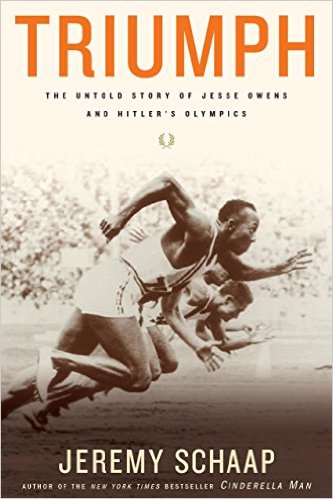
Just Off My Bookshelf: Triumph

Triumph tells the story of Jesse Owens’ awe-inspiring accomplishments during the 1936 Olympics. Jesse Owens was a black man who dominated in track-and-field while also enduring abject racism in America and in Germany (during the Olympics). This book led me to celebrate the humility, character and endurance of Jesse Owens. At the same time, it was a sober reminder of the degradation African-Americans endured with great dignity. This man faced obstacles I will never know and still accomplished remarkable feats.

A few quotes:

“I always loved running because it was something you could do all by yourself, all under your own power. You could go in any direction, fast or slow as you wanted, fighting the wind if you felt like it, seeking out new sights just on the strength of your feet and the courage of your lungs.”

As a student at Ohio State:

” [Coach] Snyder didn’t like it that Owens and Albritton could not live on campus–or in many places off-campus in Columbus–so he tried as best he could to make the track team, at least, a place where his black athletes would not feel the sting of segregation.”

“I haven’t had much time to study, you know. I work two hours a day at the legislature and four hours a day at the gasoline station.”

After winning for gold medals at the Olympics:

“Ruth [Jesse’s wife] went to New York with Jesse’s parents to see her husband for the first time in two months–but together they spent a frustrating and humiliating night being rejected for service by hotel after hotel…Even in New York, it didn’t matter whether you were the world’s greatest athlete, if you were black.”

Just Off My Bookshelf: Devotion

Devotion tells the story of American soldiers in the Korean War. A center piece of the book is the friendship between Tom Hudnor and Jesse Brown, the first African-American pilot in the Navy. It’s rare that I find a book that moves my emotions. The lives of the men and women in this book have had a lingering affect on me. Their lives give great insight into issues of race, family, courage, loyalty, and faith. The author, Adam Makos, does a great job unraveling the story in such a way that you wonder what will happen next.

A few quotes:

“Words can have all the power in the world or–none at all. That’s up to you.”

“Every night he could sneak away, Jesse practiced cursing himself until his eyes remained steady, until he could shrug away the vilest insult without flinching. He knew those words were sure to come. For what he dreamed of doing, the insults would be coming in planeloads.”

“If we stick together, we can’t be beaten.”

Where Have All The Chevy’s Gone?

I’ve spent each of the last three weeks in a different car. My day-to-day car was out of commission because of an accident. So I drove a rental car for a week. I soon found out my car was totaled so I recently started driving a new-used car. God has been tremendously faithful in all of the chaos. And there is one sobering observation that has stuck with me throughout the weeks.

My rental car was a new Chevy Malibu. I immediately noticed all the new technology in the car but what I could not miss were all the Chevy cars on the road. I used to believe that few people drove Chevy’s. But when I was behind the steering wheel of a Chevy it seemed like everybody had one. Now I drive a Volkswagen and it seems that everybody has one of those too.

It’s often been said that you don’t notice a car until you’re driving one yourself. However, I couldn’t keep from wondering how this perspective can also translate to my engagement with people. How many people do I not notice because they are different than me? Am I missing people simply because my bias is a filter that limits my perspective?

I think it’s difficult to be a Good Samaritan if we only notice people who resemble us (Luke 10:25-37).

My eyes have been opened and I see all the Chevy’s on the road now. My prayer is that I will also notice all the people who are different than me.

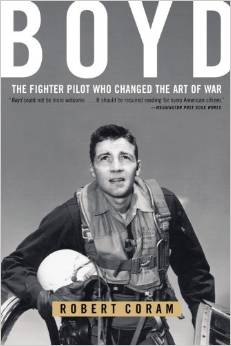
Just Off My Bookshelf: Boyd

This is a book that anyone in leadership should take the time to read. John Boyd was a man with a large personality and an impenetrable drive. He was misunderstood by many during his lifetime but his contribution to strategy changed the future of the military. His life is a testament to the importance of perseverance and determination. This book also provides insight into key elements of strategy that can improve the readers leadership.

A few quotes:

“You have principle and integrity. That means you will be criticized and attacked. But in the end you will win. Don’t let it bother you.”

“You gotta challenge all assumptions. If you don’t what is doctrine on day one becomes dogma forever after.”

“People should come first. Then ideas. And then hardware.”

Tiger, one day you will come to a fork in the road and you’re going to have to make a decision about which direction you want to go. If you go that way you will be somebody. You will have to make compromises…but you will be a member of the club and you will be promoted and you will get good assignments. Or you can go that way and you can do something…If you decide you want to do something, you may not get promoted and you may not get the good assignments…but you won’t have to compromise yourself…To be somebody or to do something…Which way will you go?

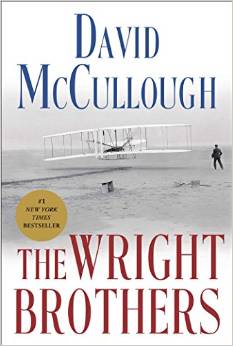
Just Off My Bookshelf: The Wright Brothers

One word comes to mind after reading this book: concentration. In a time where multi-tasking is celebrated, I was reminded through David McCullough’s book that concentration toward a single goal can be invaluable. This book tells the story of two brothers (Wilbur & Orville) who diligently pursued the solution to how people can fly. Their pursuit of knowledge and accomplishing the unimaginable will inspire everyone who reads this book.

A few quotes:
“The best dividends on the labor invested have invariably come from seeking more knowledge rather than more power.”

“No bird soars in a calm.”

“It wasn’t luck that made them fly; it was hard work and common sense; they put their whole heart and soul and all their energy into an idea and they had the faith.”

My Missiology Part 3

So where do we do the work?

I ask this question again because I have yet to provide an answer in my previous blog. I believe the ‘where’ varies for each person. I have found great insight and comfort in Paul’s words to the Corinthian church.

But we confine our boasting to the sphere of service God himself has assigned to us, a sphere that also includes you…Our hope is that, as your faith continues to grow, our sphere of activity among you will greatly expand. -2 Corinthians 10:13,15

What is the sphere that God has assigned to you? Boast in that sphere and heed Paul’s warning in the previous verses:

We do not dare to classify or compare ourselves with some who commend themselves. When they measure themselves by themselves and compare themselves with themselves, they are not wise. -2 Corinthians 10:12

Sometimes we commend our efforts by comparing ourselves to those whose sphere is different. Unfortunately we are tempted to conclude that any sphere different than our own is a lesser sphere. But Paul didn’t place his hope in carnal comparisons. Instead, he knew why and where he was sent. Paul’s hope was that faith would lead to growth; and growth would enlarge his sphere of ministry.

I am aware that some of our methods have a defined sphere that we deem the most important. I want to be clear to state that your sphere is very important. Yet, it is not more important than another sphere that God has sent some of His children to serve.

But I ask this question: does satan constrain his spheres of activity? Doesn’t God’s adversary work in politics, businesses, schools, gangs, arts, music, poor communities, wealthy communities, city streets and county streets? So why would our approach to one sphere of life be the full answer of God’s work through His church? Doesn’t light need to shine in every crevice where darkness is found?

I take great delight in encouraging people to faithfully serve in the sphere God has assigned them on their college campus, in their neighborhood, their place of work, their local gym, their kids’ school, and sports leagues. God has given each of us different gifts and interests. The variety of our gifts strengthens the work of the church. This is a great benefit to ministry in our generation. We live in a world that continues to shrink. We are able to communicate across the globe in seconds and fly across a country in hours. Rarely do people live, work, and worship in the same community. With increased transportation has come increased access which has produced a greater variety of choice. My point is that many of our personal spheres have extended beyond geographic limits. Instead of one sphere of influence we may have 3 or 5. This change has created an opportunity for each person to have an expanded sphere of ministry.

I end my statement of my personal missiology with a brief exploration of this question brought before Jesus: “ Who is my neighbor?” (Luke 10:29). This question is vital because all of the law hinges on these two commandments: Love God and Love your neighbor. But who is my neighbor? After telling the story of the Good Samaritan, Jesus responds to this question with a greater question: Who was a neighbor?

The Samaritan wasn’t expected to be the one to help but he was a neighbor. The neighbor wasn’t the person who was close; it was the person who acted mercifully. Wherever our sphere of ministry may lead us, let us be neighbors and show mercy to those we encounter.

The content of these three blogs describe significant components of my missiology. It is a mission that is agile and diverse. It is ultimately rooted in this belief: any sacrifice we may offer in our methods is superseded by obedience to going where God calls, being who God created, and doing what God commands. Obedience is greater than sacrifice. The best remedy for a hurting world is God’s glorious plan.


My Missiology Part 2 (of 3)

His intent was that now, through the church, the manifold wisdom of God should be made known           to the rulers and authorities in the heavenly realms, according to his eternal purpose that he accomplished in Christ Jesus our Lord. -Ephesians 3:10-11

Manifold wisdom is wisdom that has numerous parts that are intricate and complex. The church is the instrument in which God will make known His vastly intricate wisdom to the rulers and authorities in the heavenly realms. No single person or one gathering of people fully embody God’s manifold wisdom. Yet it’s a beautiful perspective to consider the diversity of ministry happening through the people who take steps of faith into prisons, jungles, businesses, sports teams, sororities, bars, inner cities, country roads, mountain peaks, distant islands, college campuses and church buildings. All are taking a different approach but each one is accomplishing the common goal of making known the manifold wisdom of God.

But where do we do this work?

My answer to this is: where is God calling us to go? I’ve watched people go to safe havens for their faith at Christian camps. I’ve walked with families who keep their kids out of public schools in order to give them a God honoring education at home. Then there are people who leave the comfort of their homes to enroll at the toughest school and live in the harshest community. Which approach is correct? I believe they both are.

The question of where we are supposed to do ministry is difficult to answer. The incarnation of Jesus is often an example of how to live out ministry. “ The Word became flesh and made his dwelling among us” (1 John 1:14). God is still in the business of dwelling. That’s why Paul urges the believers in Rome to offer their bodies as living sacrifices (Romans 12:1).

“Don’t you know that you yourselves are God’s temple and that God’s Spirit dwells in your midst?”           -1 Corinthians 3:16

“And in him you too are being built together to become a dwelling in which God lives by his Spirit.”             -Ephesians 2:22

The Spirit of God dwells in us. This reminds me of the glorious intent of God to be with us and not leave us. I know some conclude that since Jesus dwelled among us that we need to dwell in a certain community. I do believe that is a beautiful calling but it is not a universal calling. Even in Jesus’ dwelling He travelled to different communities. There were moments where people wanted Him to stay but Jesus had to move on.

At daybreak, Jesus went out to a solitary place. The people were looking for him and when they came to where he was, they tried to keep him from leaving them. But he said, “I must proclaim the good news of the kingdom of God to the other towns also, because that is why I was sent. -Luke 4:42

Jesus says something I think is vital for every follower of Christ: “that is why I was sent.” Knowing why we are sent is as important as where we are sent. I believe it is important to walk in step with the Spirit (Gal. 5:25) and know why we were sent. This “why” cannot always be constrained to a preconceived method. But we can make disciples who know why they were sent and the One who sent them.