Blog

Blinded By Bias

I’ve found that the most difficult biographies to enjoy are those that are blatantly biased. The authors’ bias blinds them from the flaws that actually add complexity and depth to the character. The truth is, “There is some good in the worst of us and some evil in the best of us” (MLK). The divisive arguments of our time remind me of a biased biography; they blind us from the ‘some evil’ in us and the ‘some good’ in others.

As strong as we may feel about what has happened in Baltimore, none of us have the full picture. We actually need each other to fully understand the complexity and depth of the task before us. I’ve learned that pain and brokenness show no favoritism to opinions, class, race, or position. And neither does healing. We all need healing. The truth is:

We all have something to contribute.

We all have something to lose.

We all have something to gain.

As Jesus taught us to love our enemies he reminded us that rain falls on the righteous and the unrighteous (Matthew 5:45). In the quote mentioned above, Martin Luther King ended his thought with this sentence: “When we discover this, we are less prone to hate our enemies.”

In all of this we are reminded that there is power in loving our enemy. But our biases can blind us from even loving our friends. You may disagree with someone else’s thoughts but it doesn’t mean they have nothing valuable to say.


Thoughts on How We Can Heal

In my previous blog I wrote about help that leads to healing. Below is more detail of my thoughts. This isn’t exhaustive. There are many issues to address. The big point in this blog is that we will not resolve the moral wounds of our city by only providing physical relief. Here are three ways that individuals or groups can get involved with the healing in Baltimore.

1. Time addresses the wound of indignity. You’ve heard it before, “Give a man a fish and you feed him for a day; teach a man to fish and you feed him for a lifetime.” Giving is easier and expeditious. Teaching requires time and patience. The act of teaching someone enables them to see their ability to not only receive but to also provide. This understanding benefits their family, their community, and their future.  So I recommend investing time in mentoring people or invest money in those who do.

2. Bridges address the wound of ignorance. We need people to be bridges of understanding that close the gap of ignorance. Ignorance isn’t stupidity, it’s just a lack of information. We live in a city where the strength of our diversity has been weakened by the opposition of our differences. People who are bridges don’t stand on either side of opposing views. Instead, they have a footing on both sides, the flexibility to span the differences, and the resolve to bind in agreement. We need to be bridges for the gaps of understanding between economic classes, races, generations, and cultures.

3. Consistency addresses the wound of abandonment.  Addiction, imprisonment, and irresponsibility have heightened the levels of instability in our families. Too many people have been hurt by abandonment. It’s happened in my life and I hear about it in the lives of so many others. I’ve learned that the act of showing up has more impact than the abundance of my words. Consistency dispels the lie that people are not worth the commitment. Many people have showed up in the city this week–and it’s beautiful! I am grateful for the help. If you want to be a part of the healing, then keep showing up. Whatever support you’ve offered this week–offer it for the rest of the year. Assure the community that you aren’t supporting them out of pity for their pain. But you support them out of purpose for their potential to be fulfilled.

I should admit that these are not just ideas. These are principles that I’ve learned and practiced as I serve in Baltimore. People are the invaluable resource in the success of these three principles. So even if your only resource to offer is money, then invest it in people who are taking time to teach, building bridges, and continue to show up.

Helping that Leads to Healing

In recent days I have been overwhelmed by people’s desire to help the city of Baltimore. I have been equally overwhelmed by my inability to answer this simple question: “How can I help?”

Here is my public confession: I really don’t know.

It took me a while to understand why I couldn’t answer this question. After much thought I finally realized that I have a fear of our city receiving help without healing. Our greatest need is healing. Our systems, relationships, education, families, and communities need healing. The relational healing includes those between the cultures, races, and classes in our city. Our hurt has been evident through recent deaths, riots, and the destructive responses to these events.

So, here is my answer to the million dollar question: You can help by participating in the healing. Our healing has at least three components: time, bridges, and consistency. I will elaborate on each component in upcoming blogs.

City on a Hill: The Pain and Opportunity in Baltimore

We have an opportunity in the midst of great darkness to be a light to the nation. We have the people, the resources, and the relationships to be an example of how a city works together to correct injustice.  For years I have witnessed the efforts of police officials (Lt. Col. Russell) and public officials (Nick Mosby) as they stepped beyond the call of duty to engage the people of Baltimore for the good of our city. I attended the meetings, walked in the marches for peace, and prayed on the streets with public leaders. These are just a few examples of the social wealth in our city.

Progress will be made with each step taken on the ground that has been gained. But we are sure to all lose something if we only look at what is lacking. My fear is that the leaders who have worked tirelessly to engage our community are now viewed as enemies of the community.

This makes me wonder if our tactical success is leading to strategic failure. Tactics are those actions that have a tangible (tactile) effect. So our speeches, interviews, posts, tweets, meetings, etc. are the tactics that we are employing. What are our tactics producing? Though they are reasonable, do they draw us closer to justice and righteousness in our city?

Strategy considers the big picture and takes inventory of the resources available to attain an objective. A resource of our city is that we have representatives that reflect the demographics of our city. We have relationships that have crossed the lines of faith, position, and politics for the common good of our city. And we have people who love their city. Prior to this weekend we’ve had community marches, conversations, and prayer gatherings. Are we making the most use of these resources to bring healing to our city?

Due to the national coverage of the murder of unarmed black men, the civic leaders of our city feel the burden of the nation looking to see how they will respond. This real and necessary burden compels all local officials to collaborate with the local community.  So let’s seize the willingness of this moment to increase accountability and establish a peaceful future.

I know some people will disagree. I would only ask that you consider the end result of your tactics.

As a young boy growing up in Baltimore I sincerely believed that nothing good came from here. I know that is wrong now. But what hope would we give the youth of our city if we attained justice and at the same time established unity? What pride would be gained for the youth that witnessed our city become the national example of reconciliation? How much taller could we all stand if we became the city on the hill?

Where Are You Putting That?

It hurts to feel someone else’s pain. The reality is that people are going to feel the pain of this world whether we come alongside them or not. So I prefer to feel their pain with them rather than have them bear it alone. But I have a choice and they often don’t. Nevertheless, when I end a tiring day of ministry I sense that a loving Father watches me trudge into my house carrying the hurts of so many people. And I hear Him gently say, “Where are you putting that?”

This question is like the mild reminder a parent gives their child when they are putting something in the wrong place. In these instances, I am misplacing the burden of the brokenness of this world. It doesn’t belong on my shoulders. In my personal life I have learned to take my cares to the Lord. Now I am learning to sincerely trust Him with the cares of those I love.

At the end of the day the question remains: Is the One who is strong enough to bear my sin also able to bear the sins of the world (1 John 2:2)?

The answer to this question will determine how I share in people’s pain. I will either place it on my shoulders or in His pierced hands.

How I’ve Learned to Help

Serving in communities with great needs can produce an endless stream of requests for help. It is impossible to meet every request and sometimes what we offer is more hurtful than it is helpful. Below are some lessons I have learned along the way:

1. Come alongside–Don’t go ahead: It’s not helpful to want something for a person more than they want it for themselves. (I’ve wasted a lot of energy this way). Encourage and allow people to take steps in the right direction, then come alongside to help with each step. Don’t take the step for them.

2. Needs or Wants: Sometimes people can major in the minors. So a minor want can be communicated as a major need. It’s important to listen to the request and discern its necessity. Otherwise we can reinforce an unhealthy value system.

3. There is Love in NO: Love isn’t only found in ‘yes’. Sometimes ‘no’ is the most helpful and loving gift we can offer. Remember, God is love and leading people toward Him is to love them. Sometimes that requires saying no to something that would lead people away from God.

4. Urgent isn’t always Important: Just because a need requires an immediate response doesn’t mean it deserves the highest priority. Often the urgent request forces people to respond without thinking. If something is important, then it is important before it becomes urgent. Intentionally respond to requests according to it’s importance…not only its urgency.

5. Teach Someone to Fish: Maybe you’ve heard it before: “give a man to fish and he’ll eat for a day. Teach him how to fish and he will eat for a lifetime.” Be mindful to use the chance to meet a need as an equal opportunity to invest in a person. The greatest help we can offer is to equip someone to become self-sufficient, which is the invaluable gift of dignity.

6. Comfort and Character: Give space for character development. Every discomfort in life isn’t detrimental. There is priceless character growth in delayed gratification, earning something on your own, and persevering to attain a long pursued goal.

Finding the Right Question

Sunday mornings have been great. Over the last six months we’ve had more people attend, we’ve had some great music, and some okay coffee. Yet I am constantly asking myself: Does the church exist to just have a really good Sunday morning?  If this is the reason the church exists then there isn’t much more work for us to do. All we have to do is get some better coffee and we will have a tremendous morning.

I’m being a bit silly but there is a true tension here. If we don’t get the right question then we will have highly functioning solutions that aren’t addressing the present problems. There is nothing wrong with our Sunday mornings. I love them! But we can execute highly efficient Sunday mornings without making disciples. So there has to be a better question for us to ask then how many people are attending.

There are three scriptures that remind me of the significant work of the church.

“All authority in heaven and on earth has been given to me. Therefore go and make disciples…” -Jesus

“His intent is that now, through the church, the manifold wisdom of God should be made known to the rulers and authorities in the heavenly realms” -Ephesians 3:10

“The reason the Son of God appeared was to destroy the devil’s work.” -1 John 3:8

These scriptures remind me of the right questions. Are we making disciples? Are people coming to know that Jesus died for them? Is the devil’s work being destroyed in people’s lives? These questions remind me of the power of our gathering in Jesus’ name and going in Jesus’ name. It reminds me that Jesus isn’t just the answer to our Sundays mornings. He is the eternal remedy for our world.

3 Necessary C’s: #3

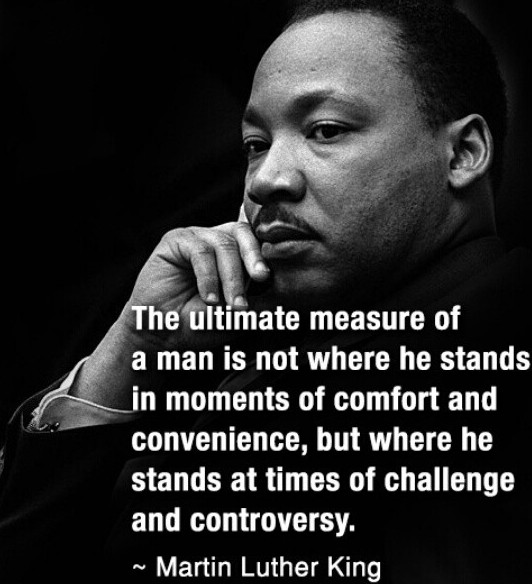
My bookshelves are filled with the names of people who left a mark on history. As I read their names I realize that a common component in each of their lives was the presence of great challenges. In this broken world we will always be confronted with challenges. The task is not how much we can complain about those challenges, but how much we can overcome them.

The quickest way to lose a battle is to believe there is no battle to fight. The idea that life owes us convenience can become a handicap to our spiritual maturity. Paul said that he wanted to know the power of Christ’s resurrection and share in His sufferings. Resurrection is only needed when something has died and it’s in the sharing of Jesus sufferings that we witness the power of His healing.

It is true that we live in a dark world and challenging times. But it is in the darkest moments that light has the ability to shine the brightest. It’s in the brokenness of our world that the power of God’s redemption can be displayed. The challenges of our time are not reasons for our defeat. They are opportunities to overcome and show that love defeats hate; righteousness conquers evil; truth trumps deceit; and Christ has conquered the grave.

Let’s stop complaining and, by faith, start overcoming.

3 Necessary C’s: #2

I remember listening to an interview with a successful college football coach. He was asked about how excited it must be to have so many talented and fast freshmen on his team. The coach’s response will always stick with me: “Yes, they’re fast. But the speed is not useful if they don’t know where to go.”

This quote sticks with me because something that moves fast is of little use if it’s quickly moving in the wrong direction.  I’ve met many people with tremendous talent and immeasurable potential. Most leadership teams want the most gifted and dynamic leaders that can be found. But those gifts can become harmful if they aren’t anchored in character. The media has displayed many people who had talent but fell because of fickle character.

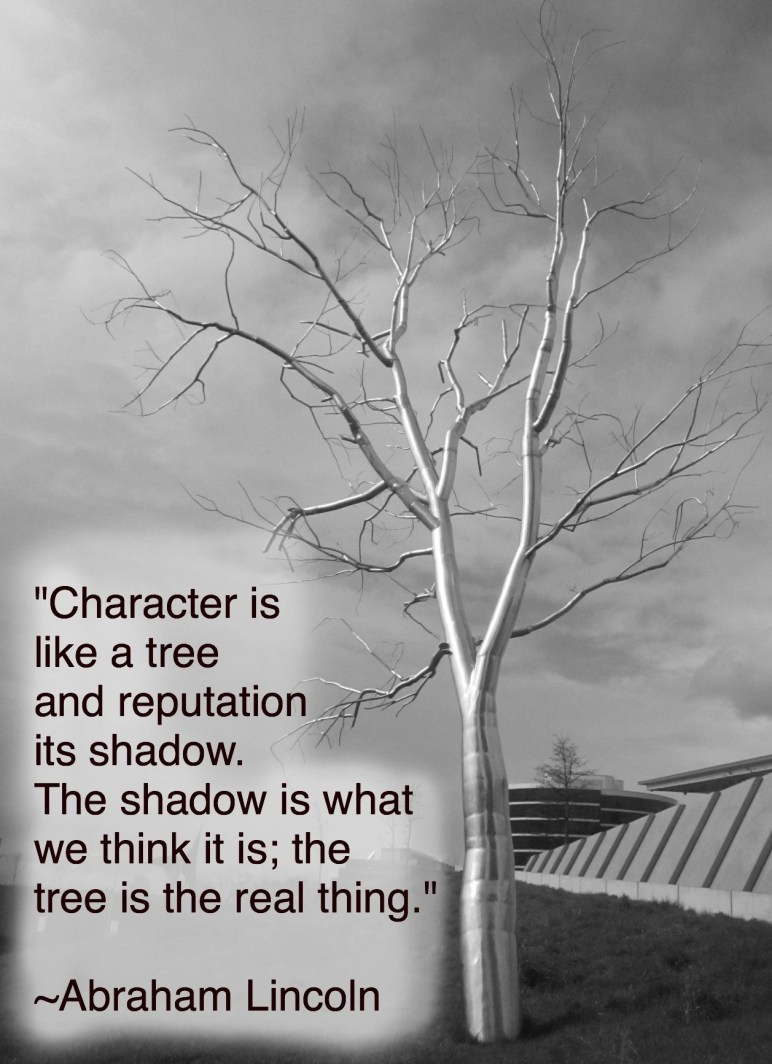
There is a significant emphasis on developing skills (i.e. leadership, communication, etc). But how much do we emphasize the development of character? We often focus on our fruit (what people see) and neglect the strengthening of our roots (what is hidden). If our character cannot sustain our talents, then we end up like a top heavy tree that topples over with the wind.

It is in the raging winds that the roots of character are strengthened. A talented person can often jump from place to place because their gifts are always welcomed somewhere else. It is this tempting doorway of escape that leads to inconsistency; which hinders character from maturing.

Character is formed when we remain consistent within the gales of life. Because like consistency, character doesn’t change with our circumstance. And character is refined by the fire of our trials. That is why Paul writes that, “we know that suffering produces perseverance, perseverance character, and character hope” (Romans 5:3-4).

Sometimes it’s not about how fast we get to the goal, but who we are when we arrive.